Improving Endoscopic Training
In Our Mission to Bust the Learning Curve in 2026

Our Next Gen 2 Endoscopic Biportal Lab is coming up this Saturday April 18 and we are doing something different this time.
As part of our CANI philosophy, Continuous And Never-ending Improvement, we held a pre-lab Zoom meeting where I gave my didactic portion of the presentation ahead of time.
That way, when Saturday comes, we can hit the ground running, starting with the dry lab where surgeons get more time to familiarize themselves with handling the instruments, so that their time on the cadaver is more efficient and impactful.
Because here is the thing, learning endoscopic spine surgery is like learning how to play an instrument or learning golf. You can study as much as you want, but at some point you have to PRACTICE, PRACTICE, PRACTICE.
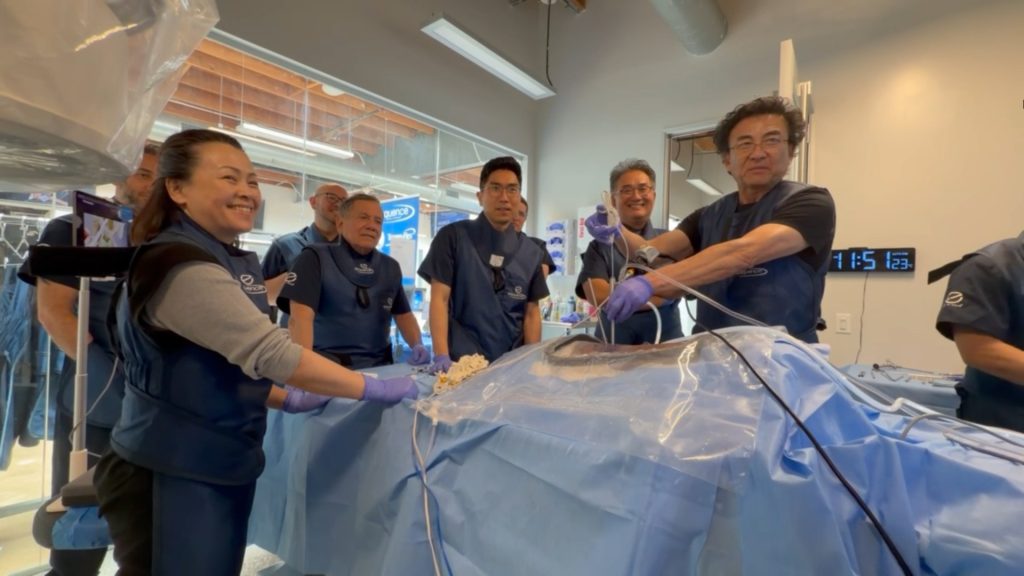
So I am excited for another great lab, and the goal is simple: make this one even better than the last. And then continue to improve for the next one. Stay tuned!!!
What About Our US Special Forces?
Attending the International Society for the Advancement of Spine Surgery 2026
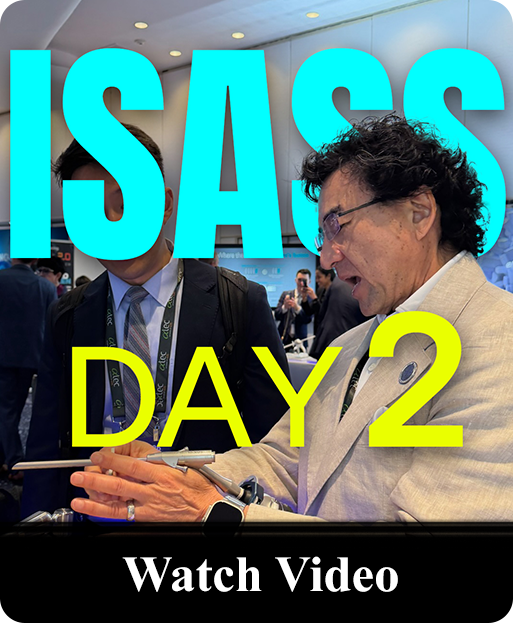
This past weekend at ISASS 2026, there was an awesome, and very important, session by David Polly, MD who is one of my mentors and someone I’ve always looked up to, and Rita Roy, MD, CEO of the National Spine Health Foundation. They are pushing the frontier of getting spine care for our active duty soldiers who get injured, as they are constantly operating under extreme conditions.
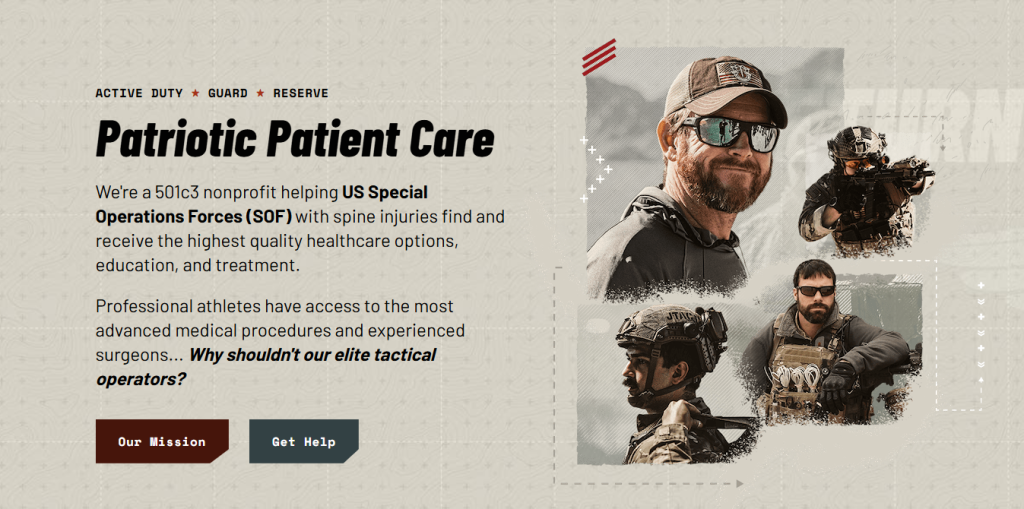
Their program is called Return to Duty, a non-profit that helps the US Special Operations Forces (SOF) community get the type of advanced medical procedures by experienced surgeons, the same way that professional athletes have access to.

Return to Duty was founded by current and former Special Operations medics and military members who have dealt with their own service-related injuries. Their mission is to connect injured operators with trusted healthcare providers, deliver patient education, and help them navigate a system that can be overwhelming. The goal is to help them return to duty and live their best lives.
"This great nation is the land of the free BECAUSE of the brave, and we are honored and privileged to do our part to help the sons and daughters of America" - Rita Roy, MD
The Best Thing To Do After Surgery
What We’re Built For
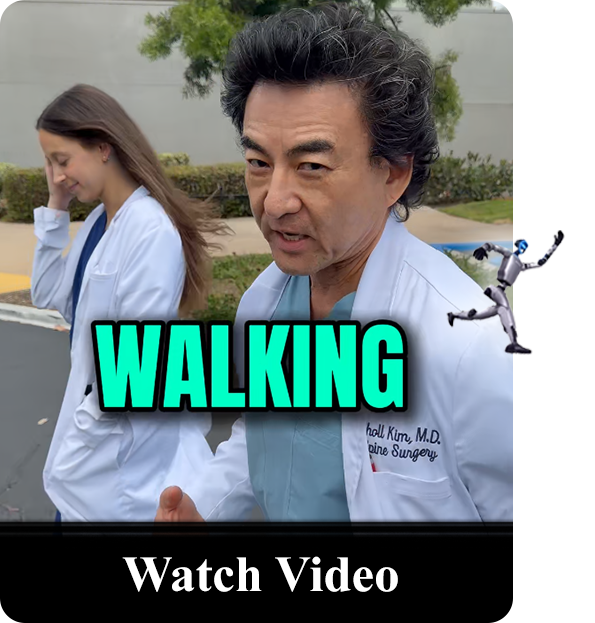
One of the best things you can do after spine surgery to help you recover is WALKING. Walking is a big deal!! When those robots came out, one of the hardest things they could do was learn to walk on two legs. That’s how complex it is.
And don’t just walk on flat ground. Walk on uneven surfaces, slightly uphill, slightly downhill, up and down little rocks.
Why?
Because that generates a lot of muscle activation and requires significant coordination of your muscles. Think about it: we didn’t evolve to live on a flat planet. We evolved to live out in nature. We’re designed to climb up and down little hills, rocks, boulders, bumps. That’s what our bodies are built for.
So if you’re going to do one thing to help recover after surgery, walking will be the best thing to do. Get outside, walk on uneven ground, and let your body do what it was designed for.