Recovering Mind and Body
The Power and Precision of LESS
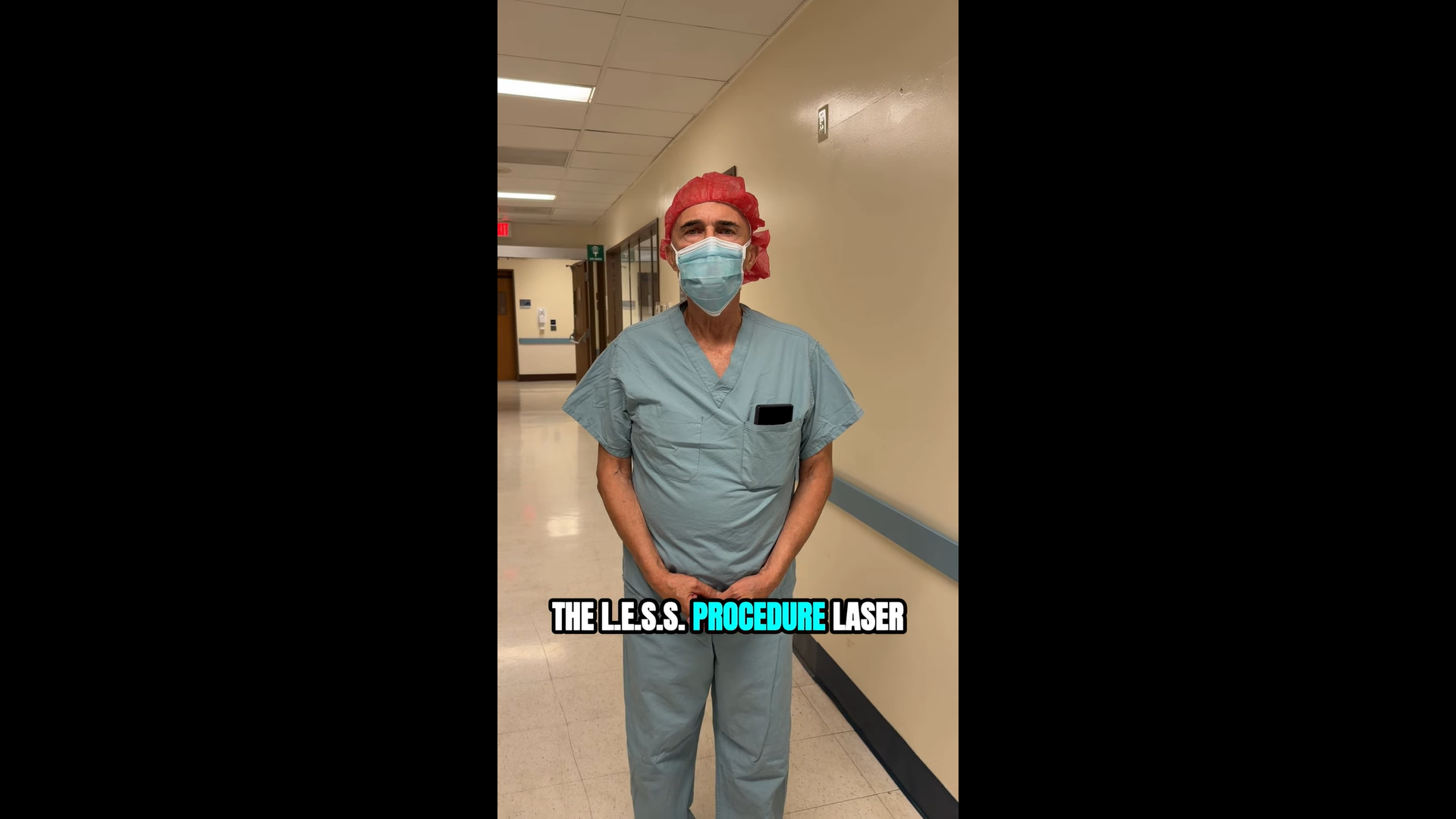
This patient is actually one of my laser technicians who I’ve known for over 20 years. After surgery he came back to work showing how mobile he was, saying it brought him from 0% – 100% mentally and physically, for mind and “heart”. It was a lot of work, but moments like this make it so worthwhile, and I have to see him every case, so thank goodness he’s doing so well as this is a close and dear colleague of mine.
His case involved a large disc herniation with severe stenosis that a prior surgery hadn’t fully resolved, which is why this might be relevant if you’re dealing with something similar. A minimally invasive endoscopic approach, laser included, allows precise removal of the pathologic disc material while protecting the nerve root, one of the most sensitive structures we work around.
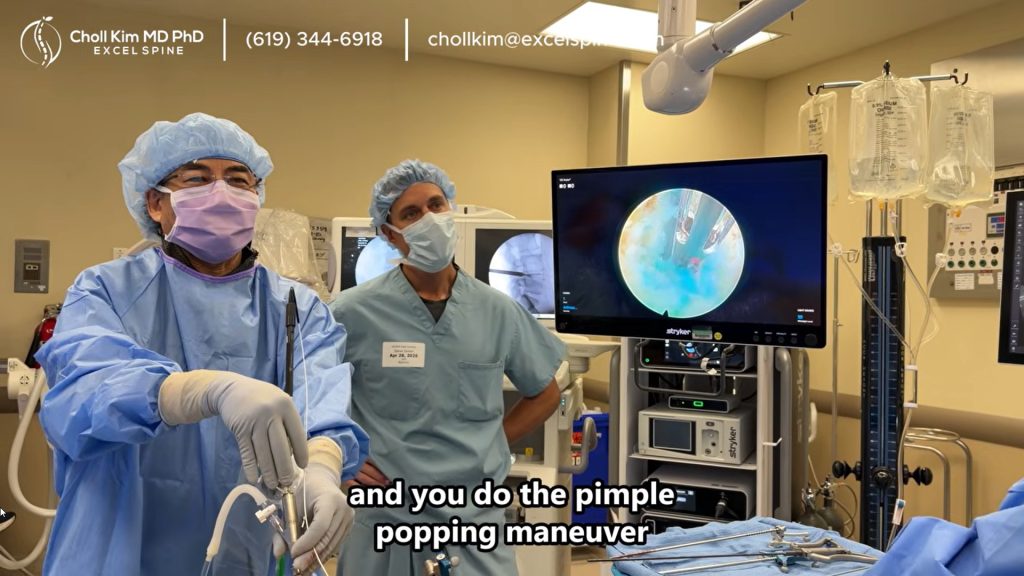
“This surgery gave me relief after a very difficult failed first procedure and months of pain… I was impressed by the precision of the endoscopic approach, the visualization of the exiting nerve root… and the careful use of laser technology near the nerve root to minimize bleeding and irritation… I am grateful to Dr. Kim and the surgical team for their skill, advanced technology, and decades of experience in minimally invasive spine care.
— Shared by the patient featured in this video with his permission.
Cervical MRI Not Helping?
View it from a different angle
If you have weird neck, shoulder or arm pain you can’t figure out from standard MRIs, this trick might help. Here’s a patient whose standard images couldn’t explain his neck pain and shoulder weakness. The neural foramen runs at 45 degrees while the slices are straight up and down at 90 degrees, so the standard views couldn’t show it clearly. But check this out: An oblique slice, perpendicular to the foramen, lets me see the canal in perfect cross section.
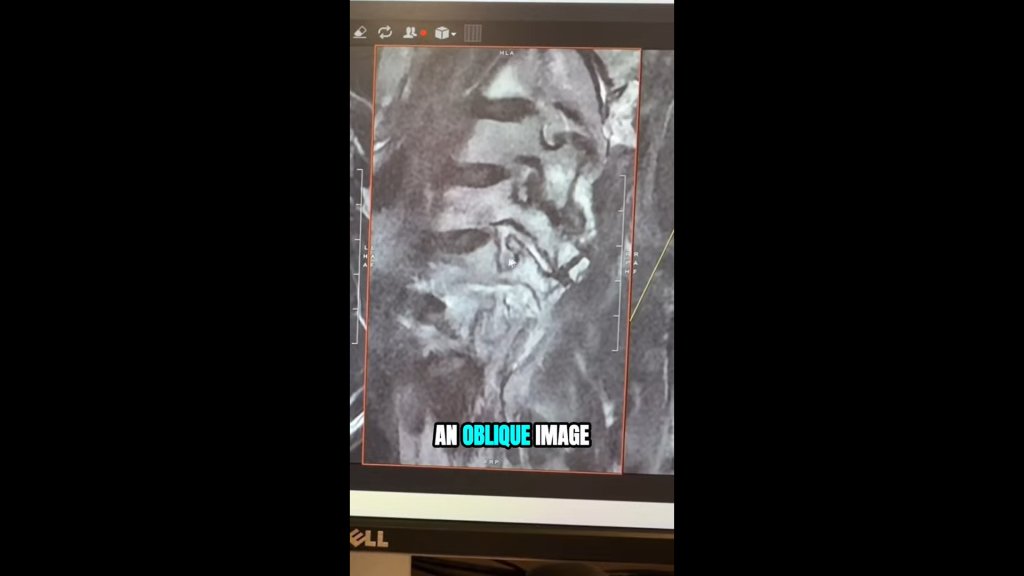
And look what showed up (see video): a bone spur going right into the neural foramen that you simply could not see on the standard views. The other side didn’t have that.
I’ve been requesting oblique images in cases where I need to figure out if it’s just pure neuroforaminal stenosis, and this is an extreme example of that. If standard MRIs aren’t giving you answers, ask for oblique images across the neuroforamen, because sometimes it will uncover things you might otherwise miss.
Tarlov Cysts
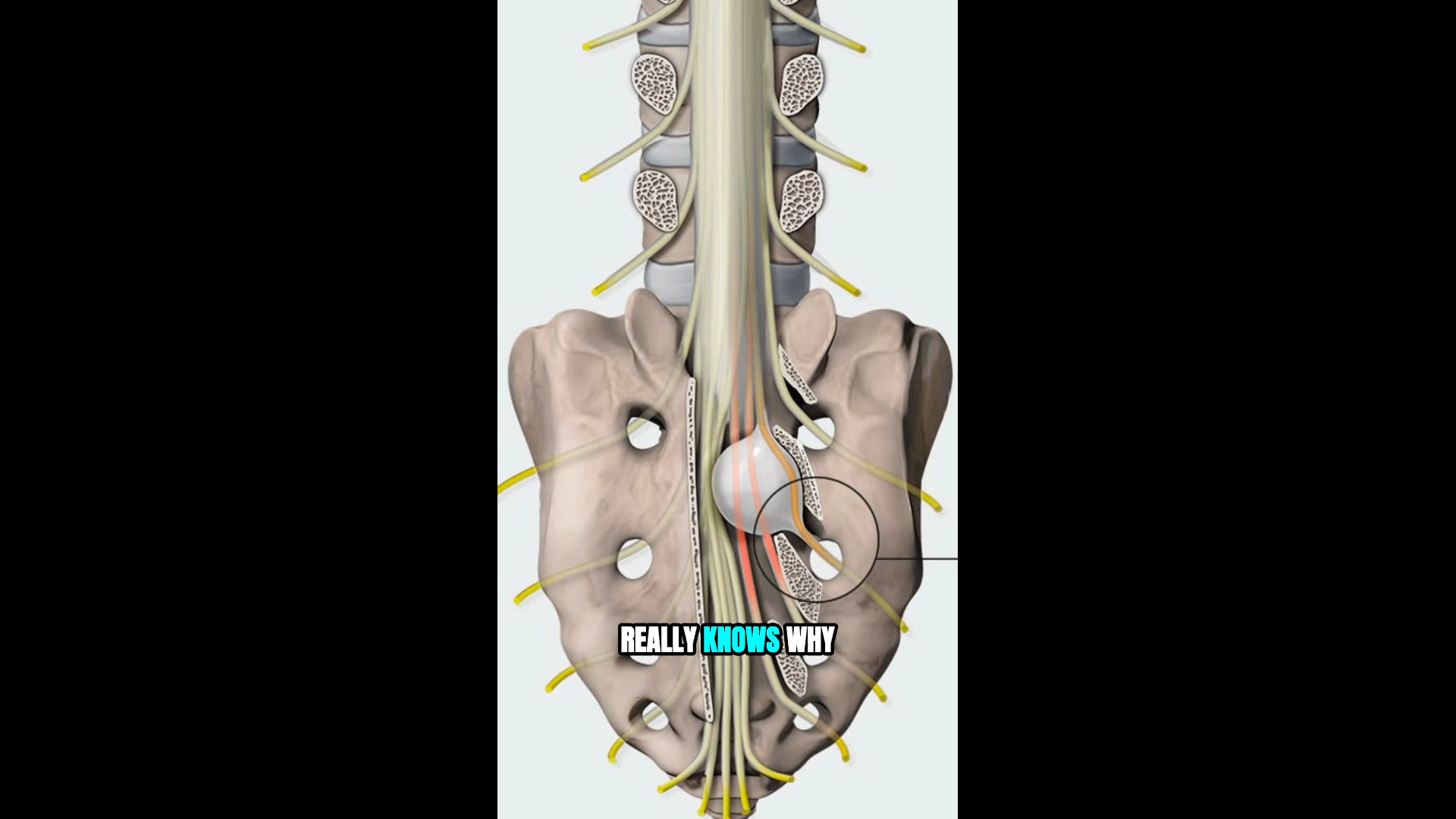
The mystery of how it forms and why people get it
If you’ve been diagnosed with a Tarlov cyst and wondered why, the honest answer is no one really knows, but I have a theory. Symptomatic ones are minuscule compared to the asymptomatic ones, which is why they’re so hard to find. My theory, and it’s just a theory, is a combination of genetic predisposition like weak collagen and bad luck.
In a state of heightened inflammation, tiny tissues called trabeculae thicken and form a honeycomb web that becomes a one way check valve, so spinal fluid keeps pumping in with no way out, and the cyst keeps growing.
If you have it, it’s 100% for you, so it’s imperative we figure out if you’re having symptoms. One way is injecting an anesthetic and steroid through the tailbone to see if you get temporarily better. If so, we do surgery, and these are some of my happiest patients!!