13 Years of Pain. 90% Better.
What Tara’s story teaches us about Tarlov cysts
Tara spent 13 years in pain. She saw every type of doctor you could imagine, from neurologists to urologists to orthopedics, and was really bounced around the medical community for a long time.
Not one doctor mentioned the Tarlov cyst that had been showing up on her scans for years. Here is the thing: most Tarlov cysts are asymptomatic. But most of the time is not the same thing as always. If you are in that small category of patients whose Tarlov cyst is symptomatic, it is 100% for you, and it can be miserable. Tara is nine weeks post-op and reporting 90% less pain.
In this conversation she shares what she was most scared about, I talk about how different people are before and after surgery, and I go deep into exactly what I do step by step during a Tarlov cyst removal.
Check out our full interview on YouTube!!
Exercise While in Pain?
Knowing good pain vs bad pain
If you’re in pain but still want to exercise, here’s what I recommend. Almost always, even when you’re in pain, it’s worthwhile maintaining a regular and consistent exercise regimen. The first adjustment is to do everything much more slowly, with lower weight and higher repetitions. Slow motion feels easy at first, but after the 15th or 20th rep it starts to really burn.
The other thing you can do is let pain be your guide. There is a difference between good pain and bad pain. Certain movements are painful but you can tell it’s kind of good pain. Keep doing those, in slow motion. Others make you stop and think, “Whoa, that can’t be good”. Avoid those. It’s not perfect, but it’s still better than being scared to do anything and getting weaker and weaker over time.
Can Fusions be Avoided?
Sometimes the Answer is Yes
People often ask me, if they’re recommended a fusion, is there any way to avoid it. It depends. If the spondy is mobile and unstable, then you need some kind of stabilizing procedure, and fusion is our only option right now, using screws and rods and cages with a minimally invasive technique.
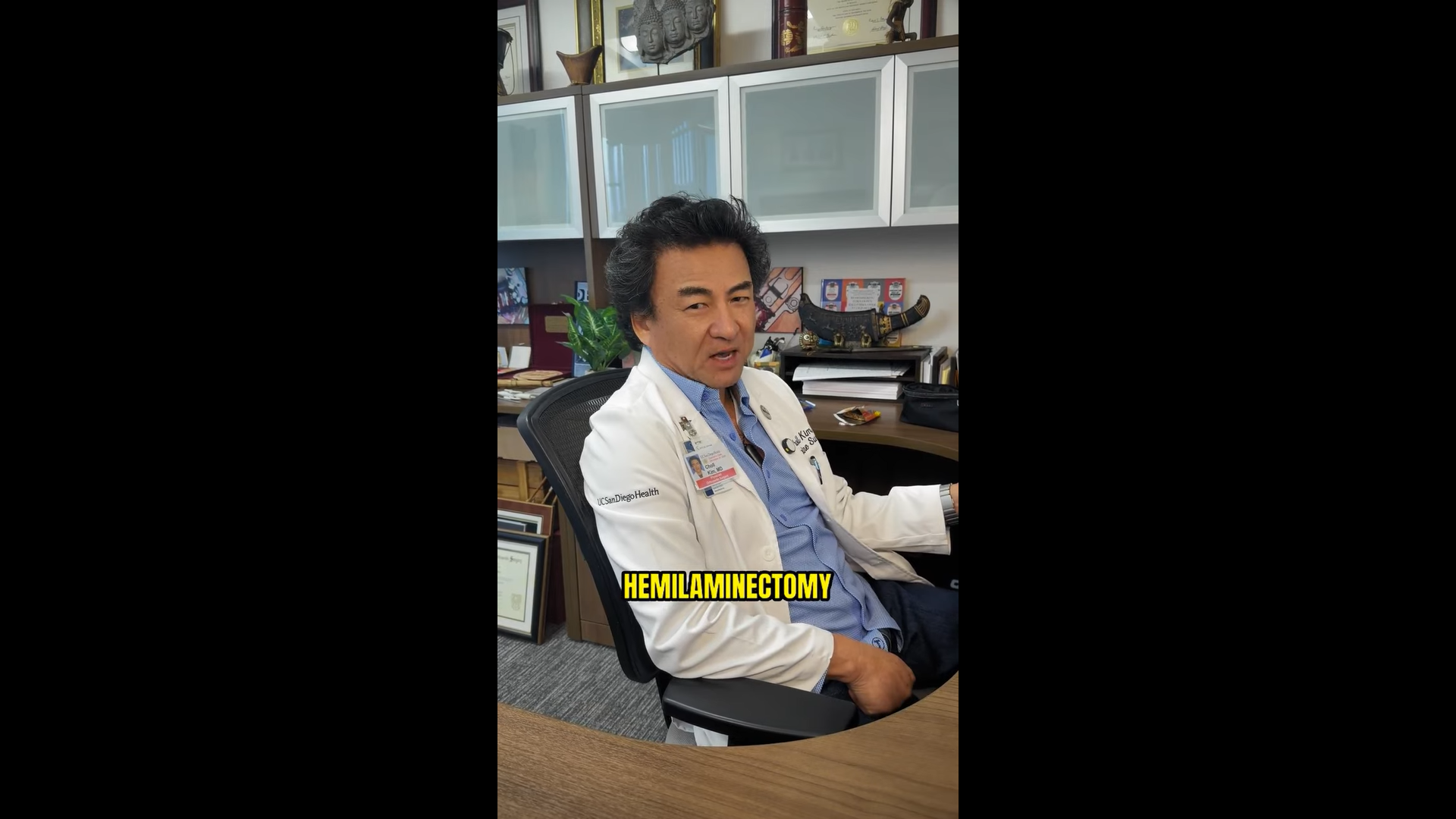
But if you don’t have instability, and your main symptom is due to stenosis, you may be able to get a minimally invasive decompression or hemilaminectomy, where you just make room for the nerves without doing anything else. If you can minimize the collateral damage of the surgery and avoid introducing additional instability, that’s the best way to avoid a fusion. A lot of patients are in that category. It’s just a matter of figuring out which ones need a fusion and which ones don’t. That’s my job.